I run a small consulting business. Skalierungsreport, balane.tech, a few smaller things. No team. The work that pays — diagnosis sprints, deliverables — gets done because clients are waiting on a date.
The work that fills the calendar in the first place — sending the follow-up two days after the call, opening the playbook before the next discovery, writing the cold email I told myself I'd write last Friday — that one is harder. Nobody asks where it is. There's no Slack ping. No invoice on the line.
I built Hokd for that work.
The honest backstory
I'm not going to claim I had some clarifying low point. I just kept noticing the same pattern: my pipeline went thin not because the discovery calls went badly, but because I forgot to follow up six times in a row. Or I'd write a discovery script, use it once, never look at it again, and a month later I'd be improvising the same questions from scratch.
The standard advice — "build a system" — is correct and useless. I had Notion, calendars, a CRM, three different to-do apps. The problem wasn't capture. It was showing up to my own system.
So I built a smaller thing. Not a system. A daily anchor.
What it actually does
The whole app is built around three questions you answer for yourself, every day:
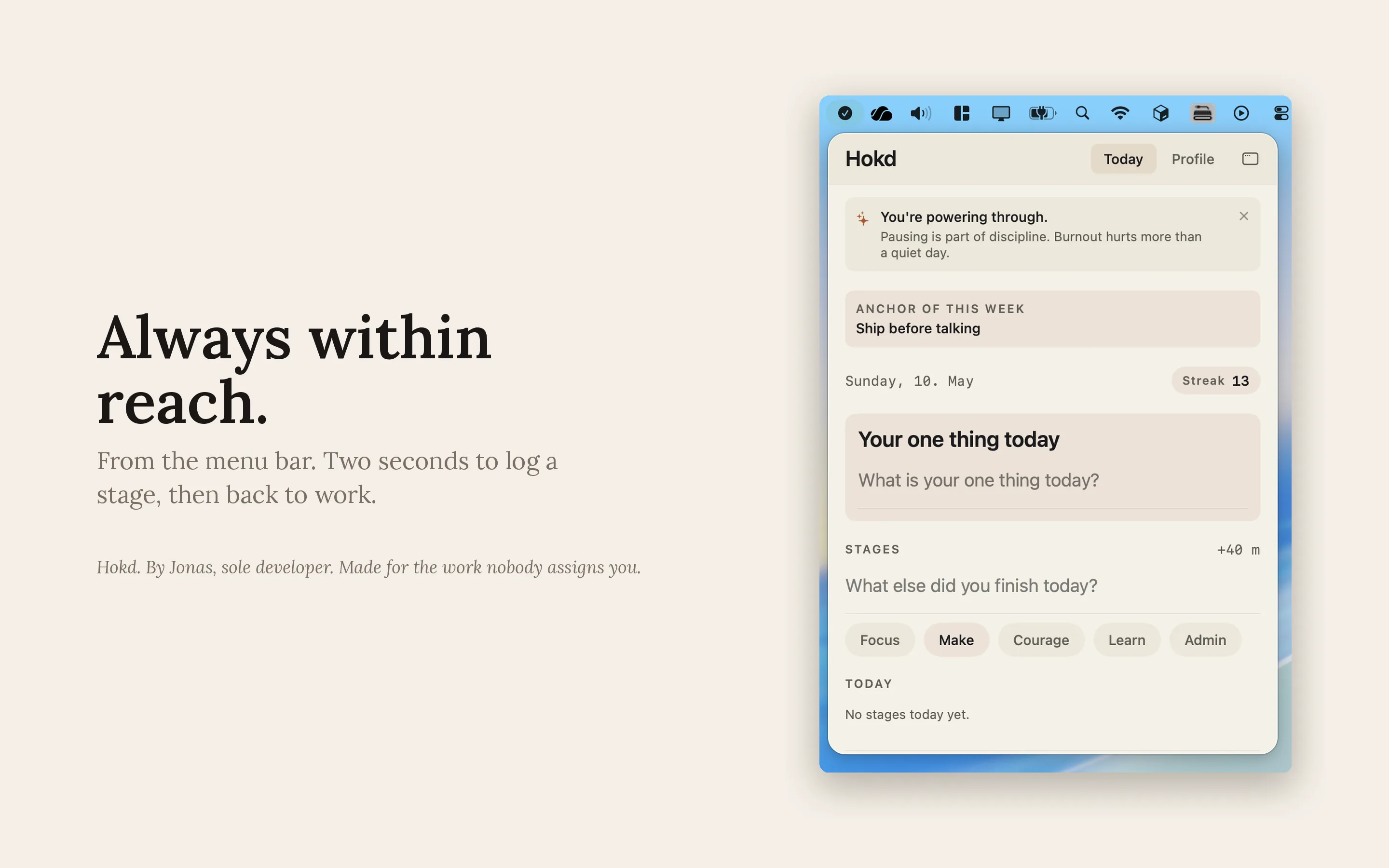
What's the one thing today? One sentence. The thing that, if I do it, the day counts. Not five. One.
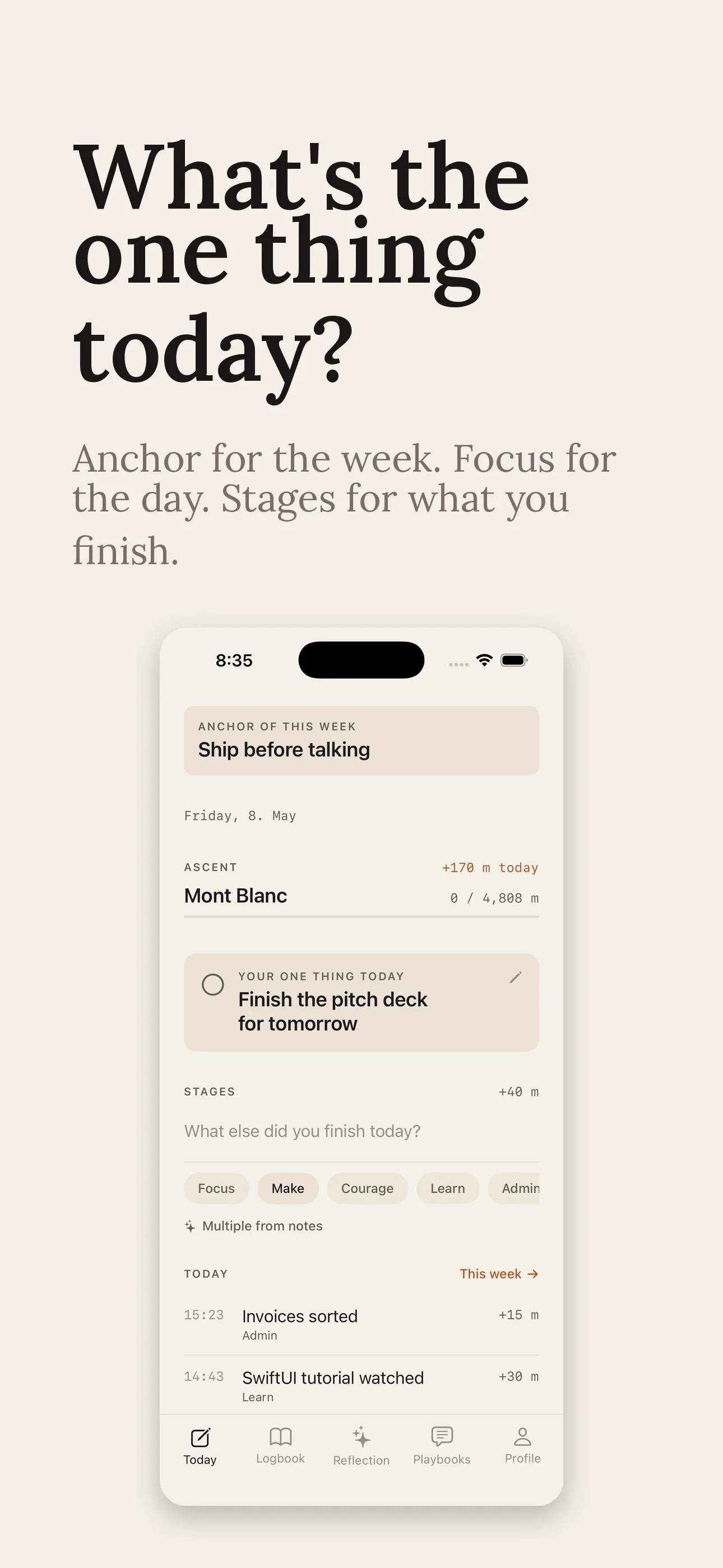
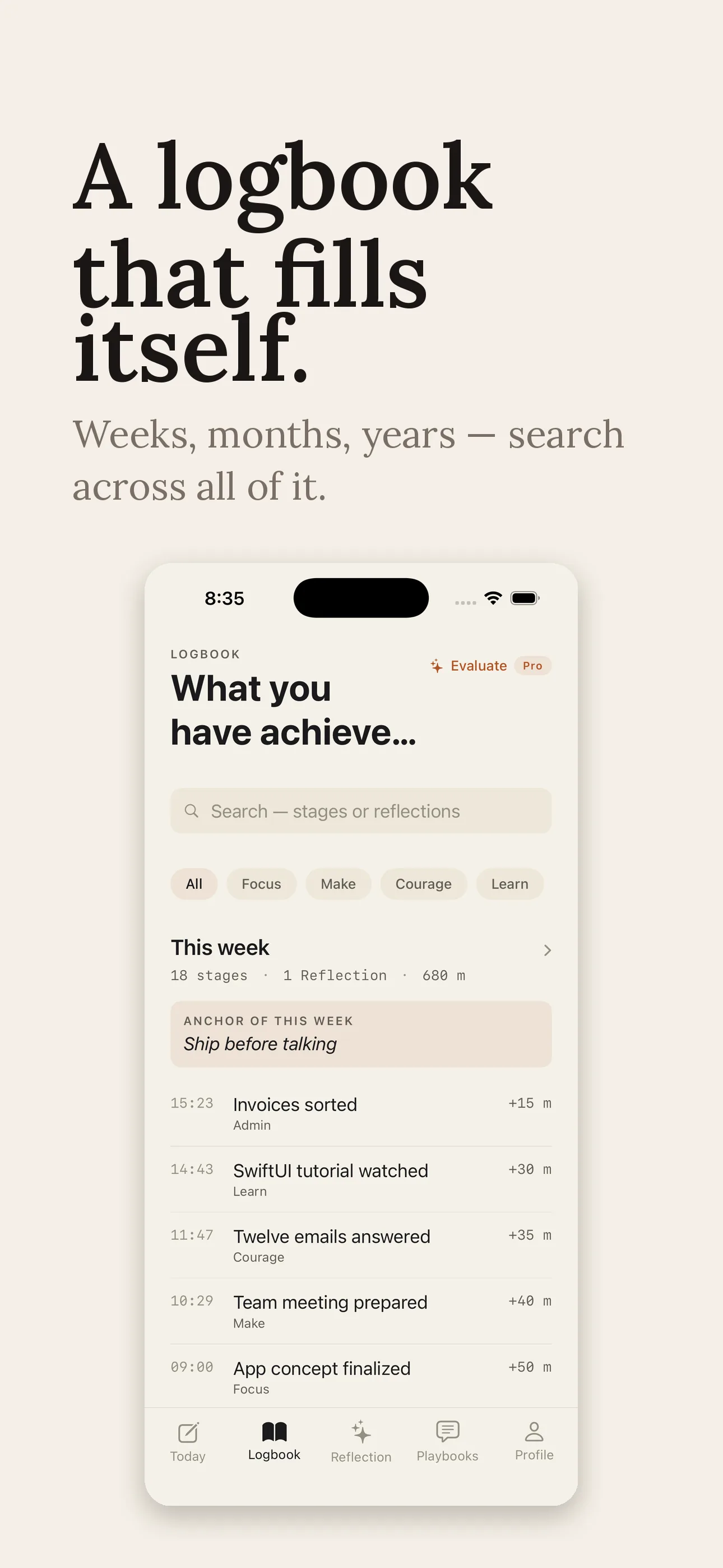
What did I finish? Whatever you got done — a sales call, a written follow-up, a piece of admin. Each thing becomes a little stage you climbed. Stages, not streaks. Streaks punish you for being human.
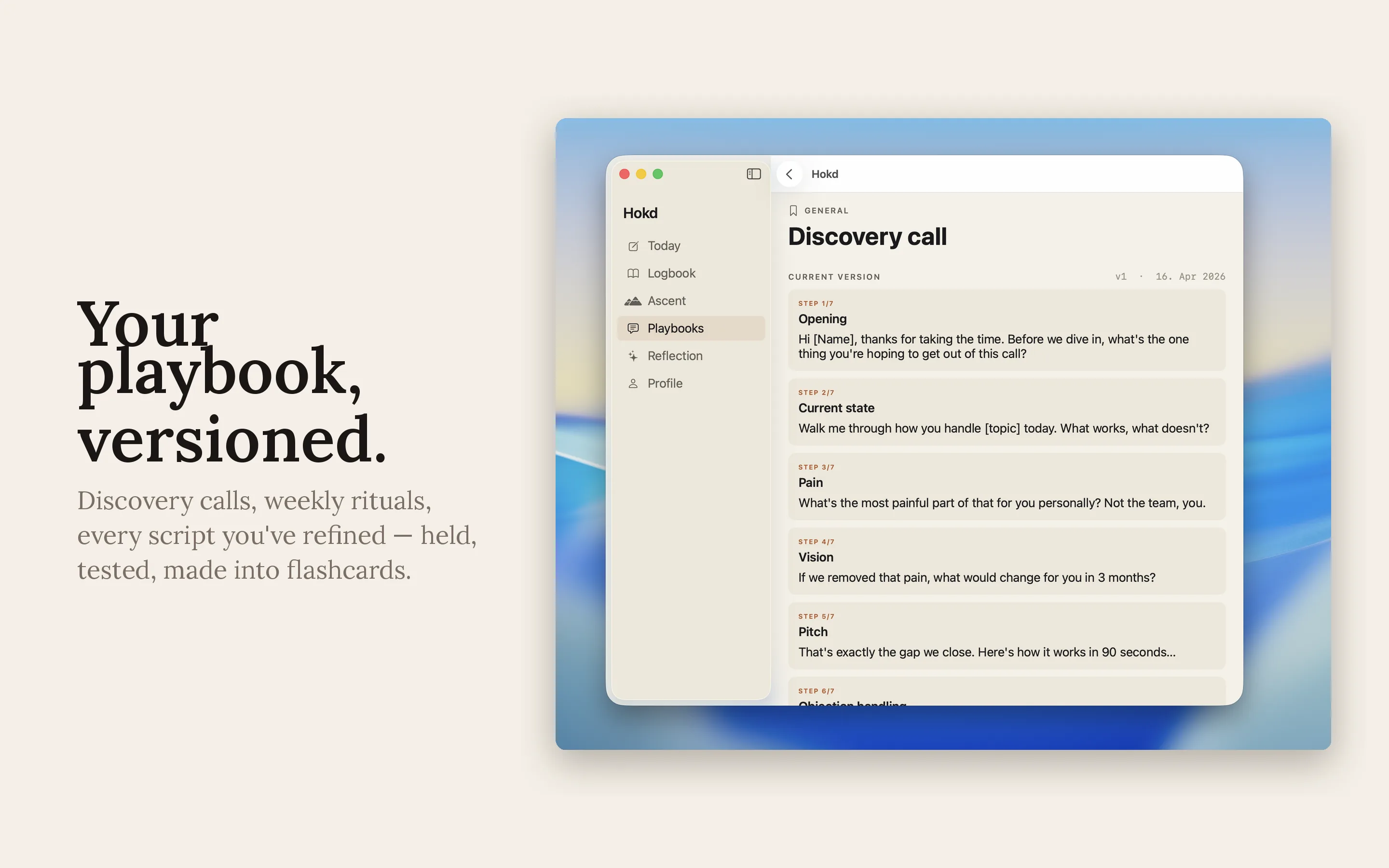
Did the script work? When I use a discovery script or a cold-email template, I want to know — over months, not over one call — which version actually converts. So Hokd lets you version your scripts as Playbooks, log each application with an outcome and a confidence rating, and then the comparison stops being feelings.
The mountain metaphor
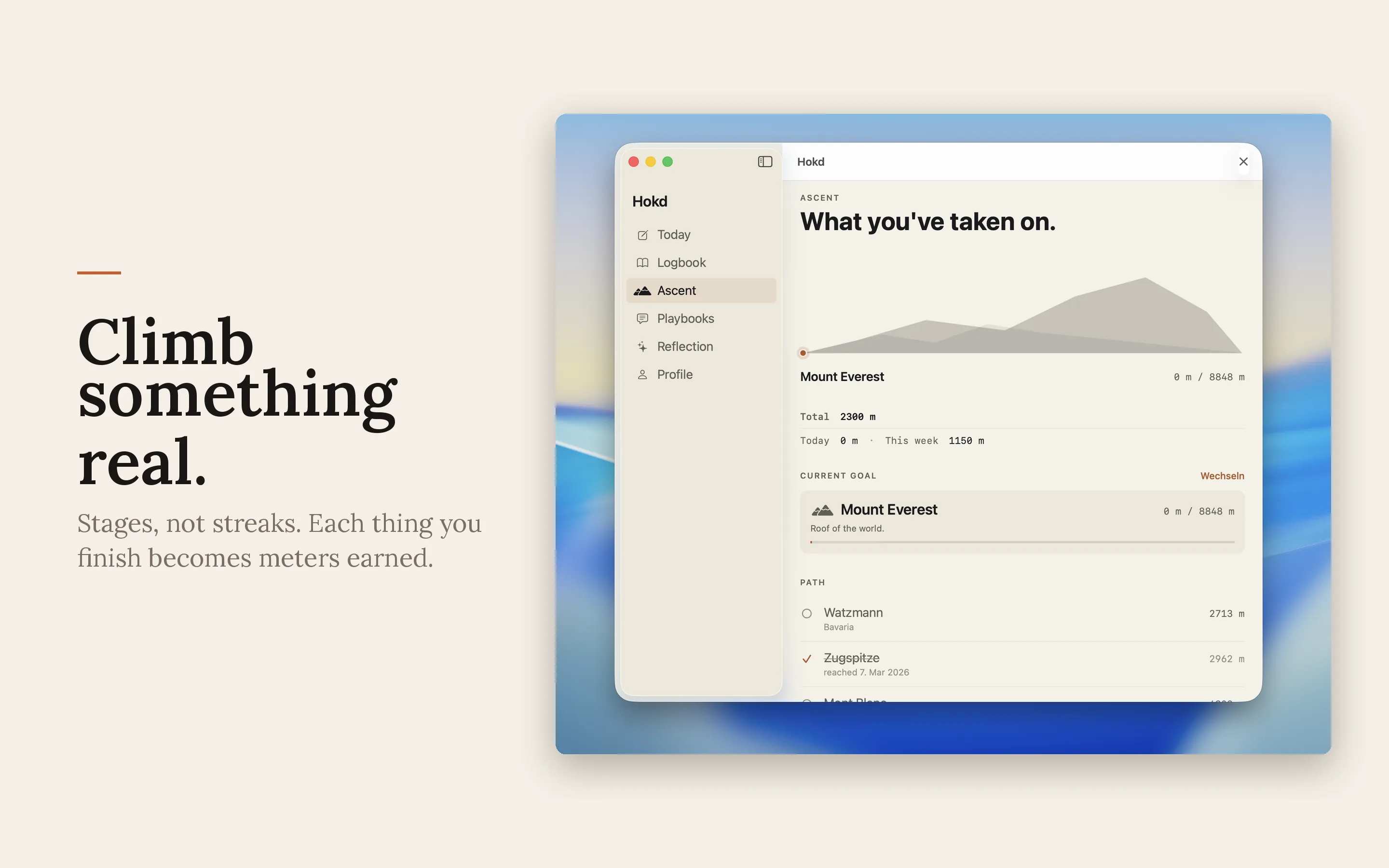
Each thing you finish is meters earned. Each goal is a mountain — Watzmann, Zugspitze, Mont Blanc, Everest. You're not chasing a productivity score. You're climbing a specific peak you picked.
It sounds silly until you've used it for a week. The metaphor turns out to do real work: it makes "I sent two follow-up emails today" feel like progress on something concrete, instead of one more line in a never-ending to-do list.
Where Apple Intelligence comes in
Hokd has a Reflection mode — long-running questions you keep returning to over weeks. "How do I come across in sales calls?" "Where am I more courageous than I think?" "What drains my energy?"
You write short observations whenever something catches your eye. On devices with Apple Intelligence, Hokd can build a synthesis of the last entries — entirely on-device, nothing leaves your iPhone or Mac. No cloud account, no API key, no third party.
That's the only kind of "AI in productivity apps" I believe in: not a chatbot that writes your emails for you, but a quiet pattern-reader that shows you, three months in, what you've already noticed about yourself.
Made narrowly, on purpose
Hokd doesn't have:
- →collaboration features
- →a web app
- →AI that writes your emails for you
- →gamification beyond the mountain itself
It does have:
- →iCloud sync across iPhone, iPad and Mac
- →a Mac menu-bar version that's always two keystrokes away
- →on-device Apple Intelligence for theme synthesis when you have it (everything still works without it)
- →a private store — your data lives in your iCloud, not on someone's server
I built it for one kind of person: someone who runs their own thing, who is fine with their tools being small, and who needs a quiet place to keep showing up to the work that nobody else is asking for.
If you want to try it
It's on the App Store for iPhone, iPad and Mac. One purchase, all platforms. No subscription.
I'm not going to tell you it'll change your life. I'll tell you that I started using my own discovery script again, the third version of it converts twice as well as the first, and my pipeline is no longer a quarterly emergency.
That was enough for me to ship it.
— Jonas